Raising bilingual kids in Arabic and English, age by age
8 answers for families abroad, built on the research on bilingual children, with every study linked.
A child learns the Arabic they hear, spoken to them by real people, so plan for plenty of it, every day. In the first three years, how much a child hears a language is what best predicts how much of it they learn. Decide who speaks Arabic and when, keep it daily, and add songs, books and more Arabic speakers. Mixing the two languages is normal, and English will come.
When school starts, English gets six hours a day, so Arabic needs protected times and places: meals, bedtime, the car. Around 5 is a good time to start the Arabic letters, ten minutes a day. From 8 to 12, Arabic needs jobs that matter to your child, like calls with family or reading to a younger sibling, and a daily reading habit with fully vowelled texts.
Two worries come up in almost every family. Will Arabic confuse my child or delay their English? Research doesn’t show that: bilingual children tell their languages apart early and reach milestones like first words on time. And what if my child understands Arabic but answers in English? It is the most common pattern in bilingual homes, and it can change: keep speaking Arabic yourself and invite Arabic answers gently. When only one parent speaks Arabic, or the help comes from a weekend school, a tutor or grandparents on video calls, the plan matters more than the method’s name.
Each answer below lists the studies it relies on, linked by DOI, with their limits. Start with the first one, or with your child’s age.
Questions parents ask: Raising bilingual kids
8 questions, youngest first. Each opens with a short answer, then a routine, what changes with age and the sources.
- Start here
How do I raise a bilingual baby in Arabic and English (ages 0–3)?
Why the amount of Arabic matters most, who should speak it, and what to expect by age.
Read the answer -
How do I keep my child bilingual in Arabic and English once school starts (ages 4–7)?
Protect Arabic time, get your child speaking it, and start reading it, ten minutes a day.
Read the answer -
How do I keep my 8- to 12-year-old speaking and reading Arabic?
Real uses for Arabic, a reading habit with vowel marks, and a say in how they learn.
Read the answer -
My child understands Arabic but answers in English. What can I do?
Why it happens, five gentle replies that invite Arabic, and a six-day plan.
Read the answer -
Will learning Arabic confuse my child or delay their English?
Five common worries, what the studies found, and where the evidence stops.
Read the evidence -
How do we keep Arabic alive when only one parent speaks it?
What “one parent, one language” can and can’t do, and the other parent’s part.
Read the answer -
How can grandparents back home help teach my kids Arabic over video calls?
Why live video calls work, ideas for each age, and a note to send to the grandparents.
Read the answer -
How do I choose an Arabic weekend school or tutor for my child?
What to look for in a lesson, the questions to ask, the red flags, and the daily follow-up.
Read the answer
Free to use with your child
Pages already on this site that go with these answers, free for home and the classroom.
- Word list
30 Ramadan words in Arabic
Every word of the month with pronunciation, letters and meaning, in one table.
See the words - Alphabet
The Arabic alphabet for kids
All 28 letters with their shapes, sounds and words to find them in.
See the letters - In Arabic
Ramadan greetings and duas
Ramadan Mubarak, the dua for breaking the fast, Eid Mubarak and more, with meanings and sources.
Learn the phrases - Guide
How to teach your child Arabic in Ramadan
A ten-minute daily routine for one word a day, from the crescent to Eid, even if you don’t speak Arabic.
Read the guide
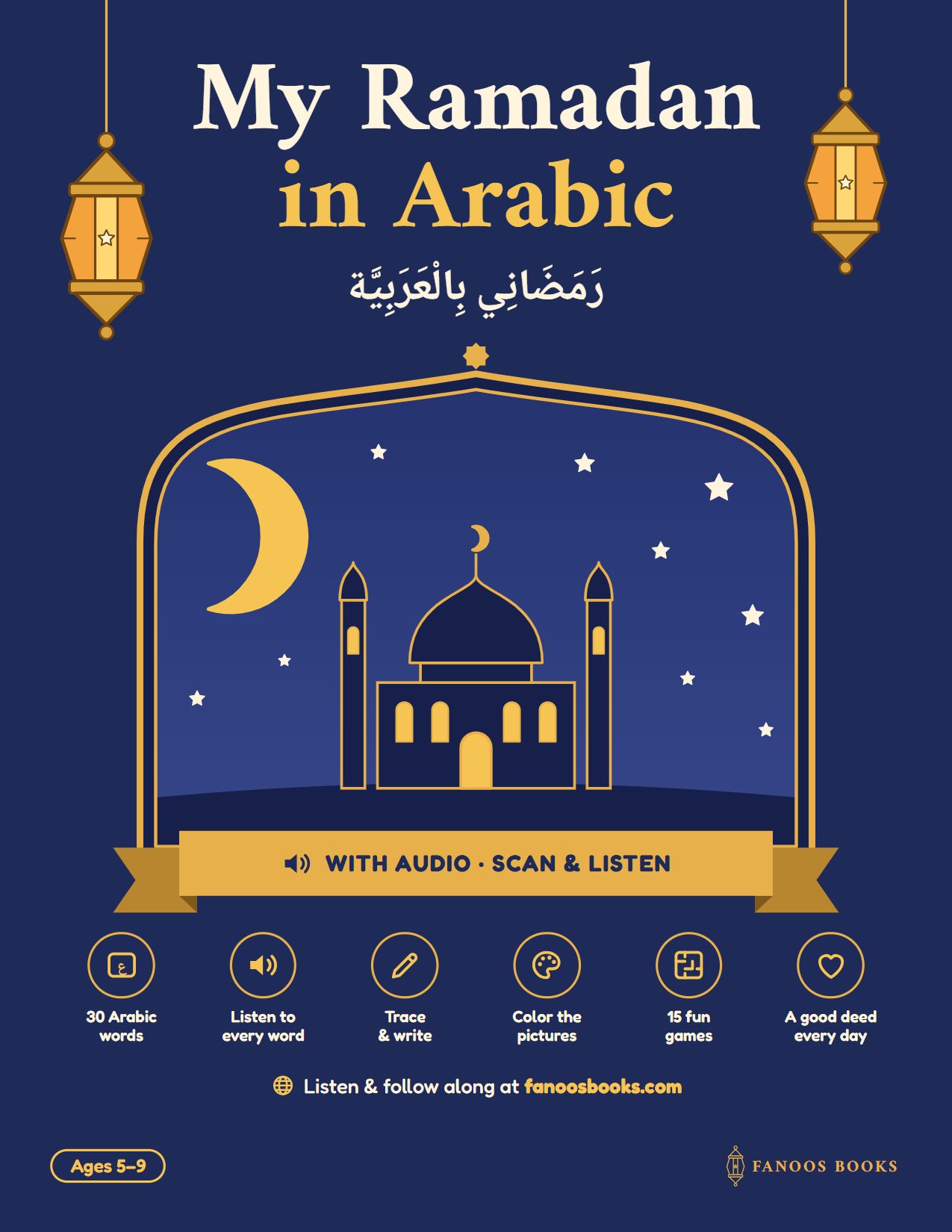
Everything in one book
My Ramadan in Arabic puts the words, the phrases, the good deeds, the games and the quiz together, one day at a time.
See the book