The Islamic months for kids: the Hijra, Ashura, Hajj and more
6 answers for parents on the Hijri calendar and the events that mark its year, from age 4.
Teach the months the way they come: one at a time, as each new moon appears. Learn the twelve names in order with a short chant, give each month one thing to remember it by, and every month ask your child which month it is, what comes next and what happens in it. A year later, they know them all.
The moon also answers the question children always ask: why does Ramadan move? Each Islamic month starts with a new crescent and lasts 29 or 30 days, so twelve of them make about 354 days, about 11 fewer than a sun year. That is why Ramadan starts about 11 days earlier each year and, in about 33 years, passes through every season. A month of watching the moon together shows it better than any diagram.
Then each month gets its story. Muharram opens a year counted from the Hijra, the Prophet’s ﷺ journey from Makkah to Madina, and holds Ashura, when Prophet Musa fasted to thank Allah for saving his people from Pharaoh. Dhul-Hijjah brings Hajj, which retraces the story of Ibrahim, Hajar and Ismail, and Eid al-Adha. And the Night Journey, Isra’ and Mi‘raj, is when the five daily prayers were given. Each page tells its story as the Quran and authentic hadith tell it, and leaves out dates and customs that have no reliable source.
Start with the twelve months, then follow the year, one story at a time.
Questions parents ask: Islamic months for kids
6 questions, youngest first. Each opens with a short answer, then a routine, what changes with age and the sources.
- Start here
How do I teach my child the twelve Islamic months?
A chant for the names, the new moon as your calendar, and one story for every month.
Read the answer -
Why does Ramadan move every year, and how do I explain it to my kids?
The moon calendar in plain words, the 11-day arithmetic, and a month of moon-watching to make it real.
Read the answer -
How do I explain the Hijra and the Islamic New Year to my kids?
The journey in seven scenes, why year 1 is the Hijra, and how to mark the day.
Read the answer -
How do I explain Ashura to my children?
Musa and the sea, the fast of thanks, and how children joined in, with a source for every part.
Read the answer -
How do I tell my kids the story of Isra’ and Mi‘raj?
The Night Journey from the Quran and sahih hadith, and its gift: the five daily prayers.
Read the answer -
How do I explain Hajj and Dhul-Hijjah to my kids?
The family story behind Hajj, its days in order, and how children at home take part.
Read the answer
Free to use with your child
Pages already on this site that go with these answers, free for home and the classroom.
- Dates
Ramadan 2027 with kids
When Ramadan, the last ten nights and Eid are expected, and a plan for each week.
See the dates - Word list
30 Ramadan words in Arabic
Every word of the month with pronunciation, letters and meaning, in one table.
See the words - Free printables
Coloring pages, charts and trackers
Ramadan coloring pages with Arabic words to trace, a good deeds chart, a moon tracker and alphabet worksheets.
Print them
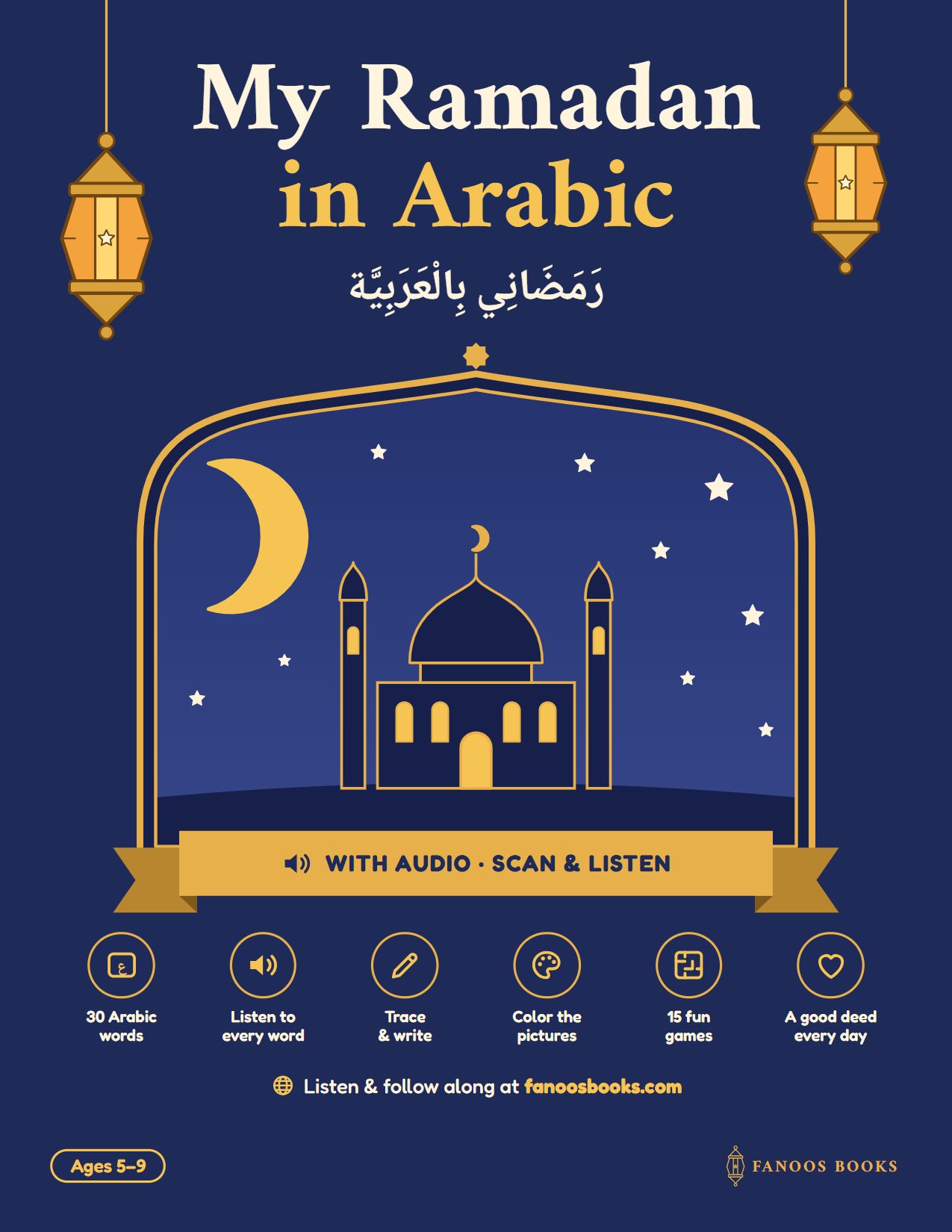
Everything in one book
My Ramadan in Arabic puts the words, the phrases, the good deeds, the games and the quiz together, one day at a time.
See the book