Ramadan for kids: explaining fasting, Laylat al-Qadr and Eid
7 answers for parents, from a preschooler’s first Ramadan to a first practice fast and Eid.
Explain Ramadan in one true sentence your child can repeat, then let them live it. For a 3- to 5-year-old: “Ramadan is a special month when grown-ups don’t eat or drink in the daytime, to get closer to Allah and to remember people who are hungry.” Then come things to see and do: the new moon, a job at iftar, a lantern, the sleeps counted to Eid. From 6 to 9, children want reasons: Allah asked it of us in the Quran, and fasting also teaches self-control and care for people who are hungry.
Fasting becomes a duty at puberty. Before that, children practice, as the Companions’ children did, and many families begin short practice fasts around 7, when a child is healthy and wants to: a morning, then until noon, then a full weekend day. The last ten nights bring Laylat al-Qadr, “better than a thousand months,” which for children means a short special routine on the odd nights, not staying up until dawn.
Giving runs through the month: sadaqah, any good you give, which every child can do today; zakat, a share of savings that grown-ups must give each year; and zakat al-fitr, given for every member of the family before the Eid prayer. Then come the two Eids, one at the end of Ramadan and one during the Hajj, and a practical question for families abroad: what to do when Eid falls on a school day.
Each answer below starts with a short answer and links every verse and hadith to its source. Start with the first one, or with your child’s age; the dates of Ramadan 2027 and the free printables are below.
Questions parents ask: Ramadan for kids
7 questions, youngest first. Each opens with a short answer, then a routine, what changes with age and the sources.
- Start here
How do I explain Ramadan to my 3- to 5-year-old?
One sentence to say, the moon to watch and a job at iftar: Ramadan for the youngest.
Read the answer -
How do I explain Ramadan to my 6- to 9-year-old?
The Quran’s reason in their words, seven questions for the first week, and talks at iftar.
Read the answer -
At what age should my child start fasting, and how do we practice?
A duty at puberty, practice before it: the Companions’ way, a step-by-step plan and the warning signs.
Read the answer -
How do I explain Laylat al-Qadr to my kids?
The story, why the date is hidden, Surah Al-Qadr verse by verse, and five odd nights that keep bedtime.
Read the answer -
How do I explain zakat and sadaqah to my kids?
Sadaqah, zakat and zakat al-fitr in simple words, with a five-day plan to prepare zakat al-fitr together.
Read the answer -
How do I explain the two Eids to my children?
Eid al-Fitr and Eid al-Adha side by side, Ibrahim’s story told gently, and the Eid Sunnah for kids.
Read the answer -
How do we make Eid special for our kids when it’s a school day?
Home or school, what to write to the teacher, and a plan for Eid week that works abroad.
Read the answer
Free to use with your child
Pages already on this site that go with these answers, free for home and the classroom.
- Dates
Ramadan 2027 with kids
When Ramadan, the last ten nights and Eid are expected, and a plan for each week.
See the dates - Checklist
30 Ramadan good deeds for kids
One small good deed for each day, with boxes to tick and a free chart to print.
See the 30 deeds - Guide
How to teach your child Arabic in Ramadan
A ten-minute daily routine for one word a day, from the crescent to Eid, even if you don’t speak Arabic.
Read the guide - Free printables
Coloring pages, charts and trackers
Ramadan coloring pages with Arabic words to trace, a good deeds chart, a moon tracker and alphabet worksheets.
Print them
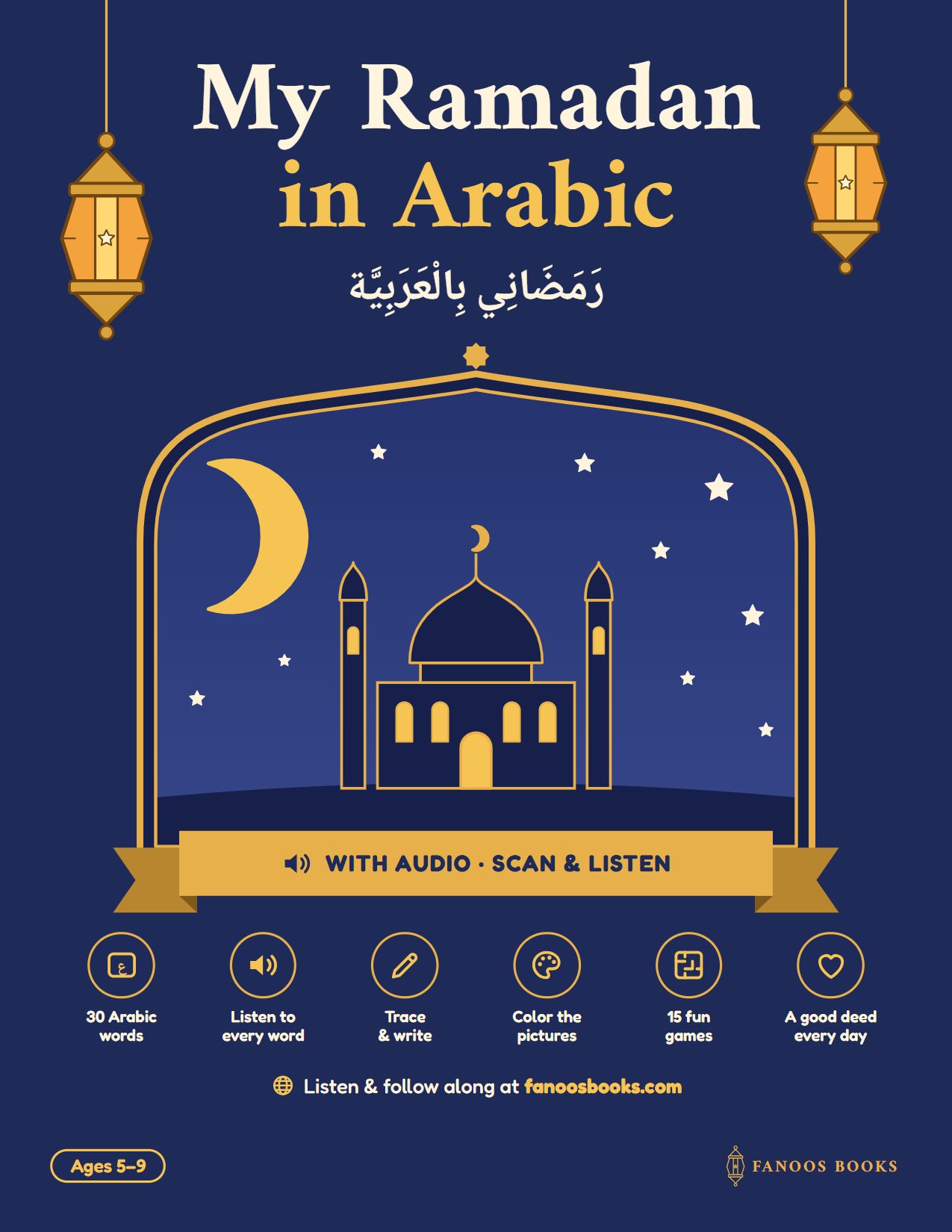
Everything in one book
My Ramadan in Arabic puts the words, the phrases, the good deeds, the games and the quiz together, one day at a time.
See the book