Quran for kids: reading, memorizing and tajweed, age by age
10 answers for parents on reading, memorizing and understanding the Quran, from age 3, with every verse and study linked.
Little and often, and by ear first. Young children memorize by listening, so a short surah heard at the same moments every day, in the car or at bedtime, and said together a line at a time, does more than any worksheet. Reading is a separate path: it starts with the Arabic letters and their short vowels, five or ten minutes a day, long before your child opens a mushaf.
Most families begin with Al-Fatiha, then work backwards from An-Nas through the short surahs at the end of the Quran. From 6 to 9, children can follow a plan: one or two new verses most days, and more time spent reviewing (yesterday’s verses, this week’s, one older surah) than learning new ones. From about 7, once they read the mushaf with confidence, tajweed comes in one rule at a time: heard from a reciter, found in a surah they know, said aloud and checked by a teacher. From about 10, children can run their own memorizing, with you as their coach.
Understanding belongs in Quran time from the start: a sentence about what a surah is about, two or three of its Arabic words, and the story behind it where there is one. The stories of the prophets fit here too, told from the Quran first, one episode at a time. Families also ask about the Noorani Qaida: what matters is what it teaches, in about that order, not the particular book.
Each answer below starts with a short answer, then gives a routine, what changes with age and its sources: verses linked to quran.com, hadith to sunnah.com, studies by DOI. Start with the first one, or with your child’s age.
Questions parents ask: Quran for kids
10 questions, youngest first. Each opens with a short answer, then a routine, what changes with age and the sources.
- Start here
How do I help my 3- to 5-year-old memorize short surahs?
By ear: one surah, one reciter, the same moments every day, and lines your child finishes.
Read the answer -
How do I teach my 4- to 6-year-old to read the Quran?
Letters and sounds first, then short vowels and joining: the qaida steps, a few minutes a day.
Read the answer -
Which surahs should my child learn first, and in what order?
Al-Fatiha, then Juz Amma from An-Nas backwards: the order, the reasons and the lengths.
Read the answer -
What is the Noorani Qaida, and does my child need it before the Quran?
What the qaida teaches, lesson by lesson, how long it takes, and when you can skip the book.
Read the answer -
How do I help my 6- to 9-year-old memorize short surahs?
New, recent, old: a small new piece and a steady review, every day.
Read the answer -
How do I tell my kids the stories of the prophets, like Musa, Yusuf, Nuh and Yunus?
From the Quran first: Nuh, Yusuf, Musa and Yunus, with verses, questions and a free quiz.
Read the answer -
How can I teach my child the meaning of the Quran, not just the words?
One idea per surah, a few Arabic words, the story behind it, and a question to talk about.
Read the answer -
How do I teach my 7- to 10-year-old to read the Quran?
From the qaida to the mushaf: listen, reread, get checked, and add tajweed one rule at a time.
Read the answer -
How do I teach tajweed to my child?
One rule at a time: hear it, find it in a known surah, say it, get it checked.
Read the answer -
How can my 10-year-old memorize surahs and review them on their own?
Set a target, self-test, mark weak spots, rotate review: you become the coach.
Read the answer
Free to use with your child
Pages already on this site that go with these answers, free for home and the classroom.
- Alphabet
The Arabic alphabet for kids
All 28 letters with their shapes, sounds and words to find them in.
See the letters - In Arabic
Ramadan greetings and duas
Ramadan Mubarak, the dua for breaking the fast, Eid Mubarak and more, with meanings and sources.
Learn the phrases - Quiz
Islamic quiz for kids
Ten questions about the prophets, with explanations and sources. Tap to answer.
Take the quiz
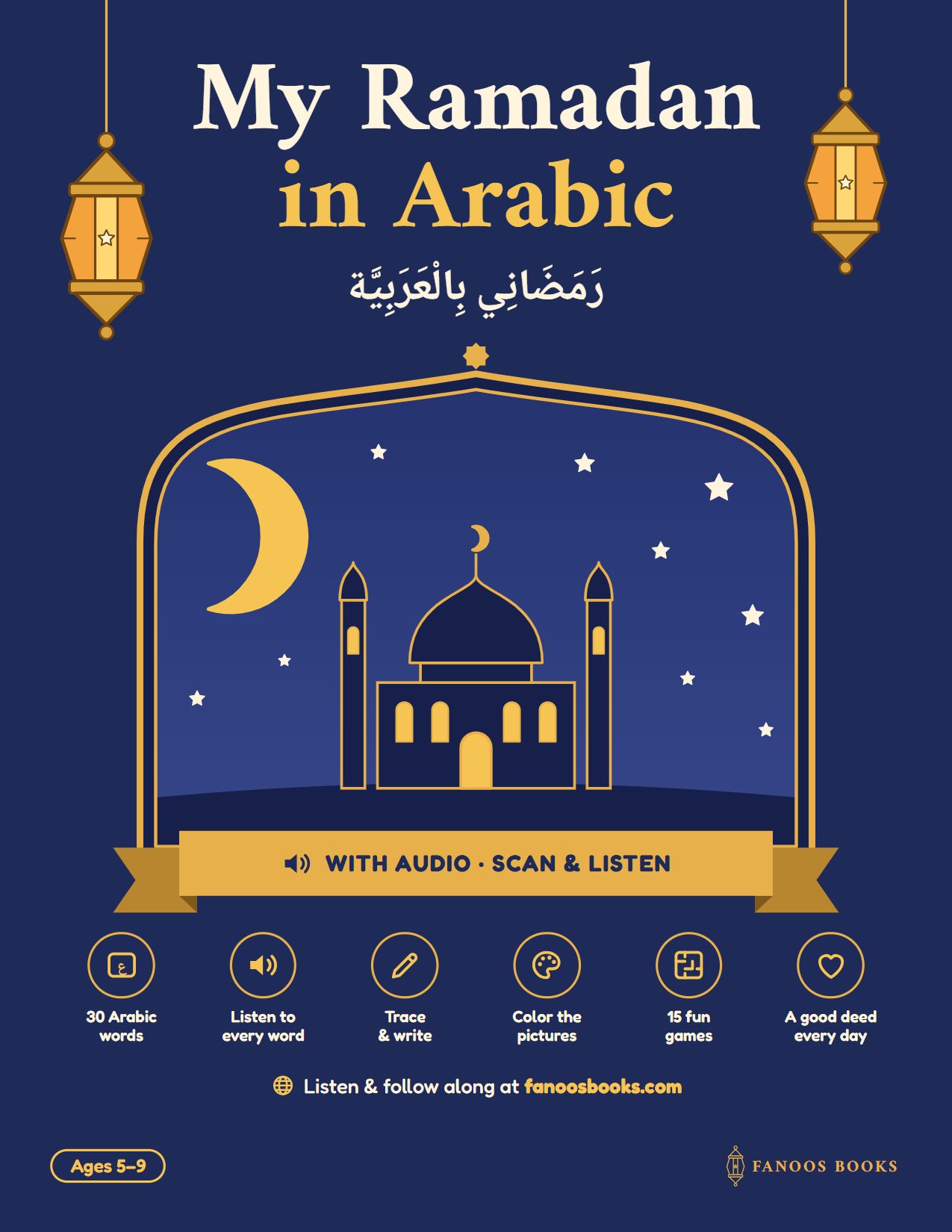
Everything in one book
My Ramadan in Arabic puts the words, the phrases, the good deeds, the games and the quiz together, one day at a time.
See the book